
COP30: FONPLATA and Allies Promote Global South Leadership in Climate Adaptation
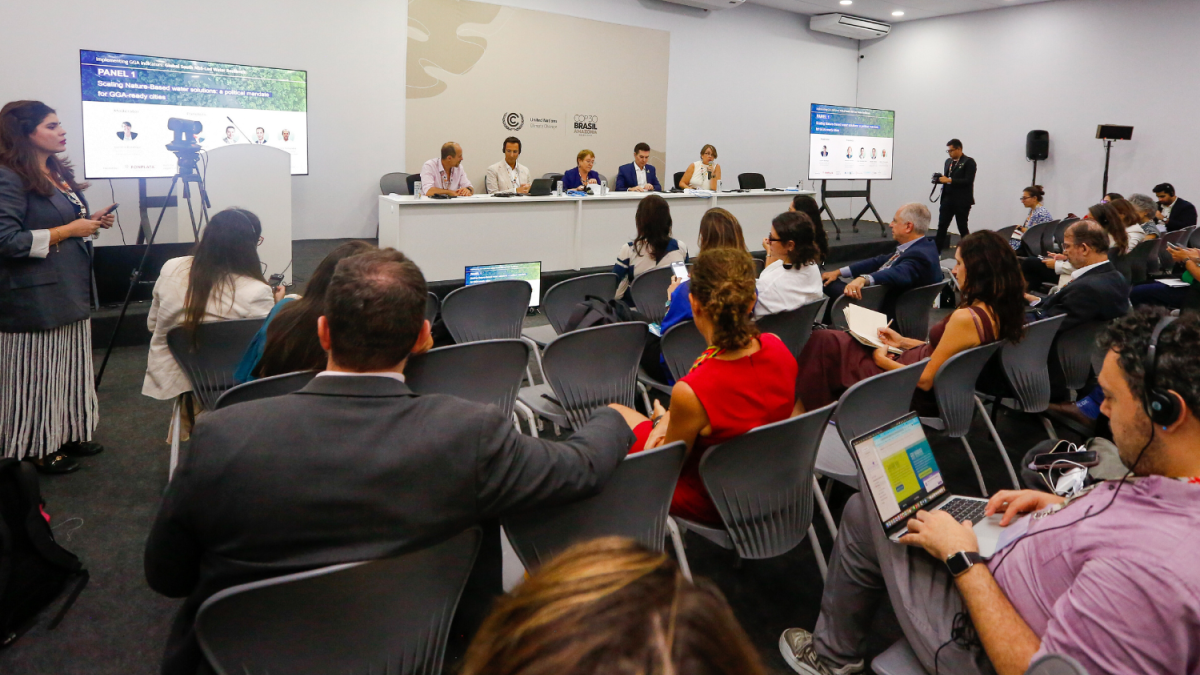
During COP30, FONPLATA — Development Bank, together with six partner organizations, placed water and nature-based solutions (NbS) at the center of the global debate on climate adaptation. The official side event, Implementation of Global Goal on Adaptation (GGA) Indicators: Global South Leadership in Nature-Based Solutions for Water Resilience, was held on November 13 in the Blue Zone and focused on Indicator 6a on water and sanitation, which is essential for measuring progress toward resilient and prepared cities.
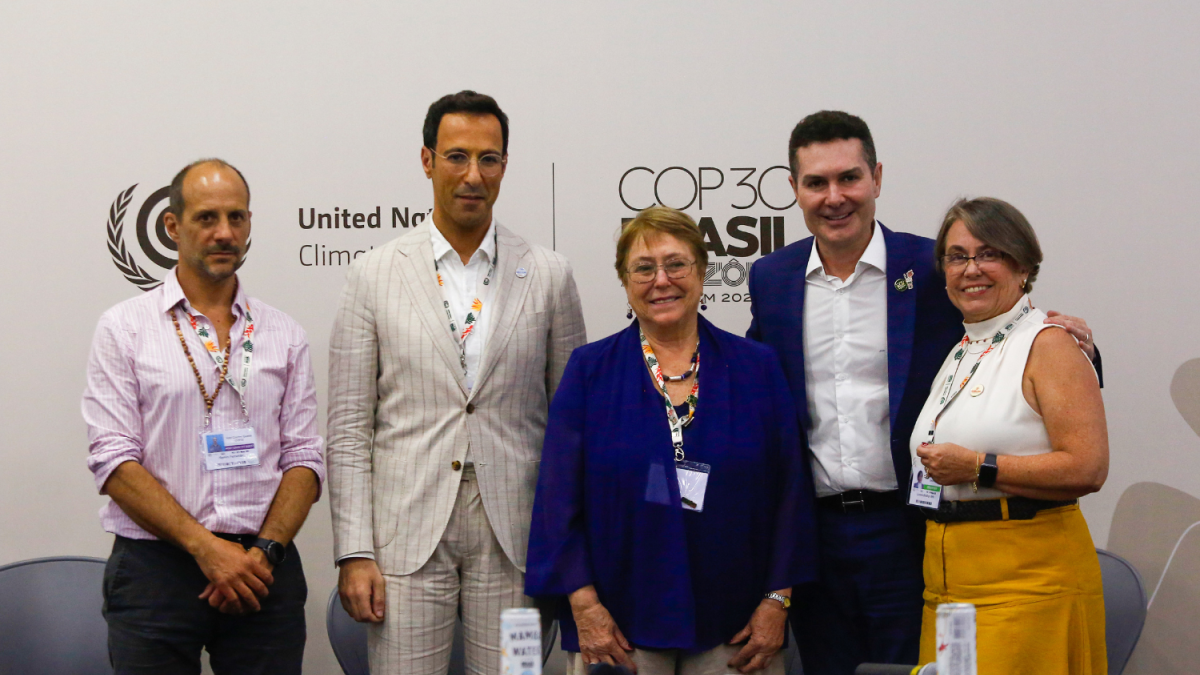
The meeting featured two panels. The first, Scaling Up Nature-Based Water Solutions: A Political Mandate for Cities Prepared for the Global Goal on Adaptation, brought together Michelle Bachelet, former President of Chile; Jader Barbalho Filho, Brazil’s Minister of Cities; Musab Alomar, Vice President of Strategy at the OPEC Fund for International Development; and Ramiro Fernandez, Campaign Director of the Climate Champions Team. The discussion was moderated by Luciana Botafogo, FONPLATA’s Executive President.
The panel addressed the strategic role of NbS in urban adaptation, underscoring the need to combine good governance, adequate financing, and local participation for adaptation to have a real impact. It also emphasized that subnational governments must play a leading role in implementing the GGA, as they are the ones who know and manage climate risks firsthand. Finally, it was highlighted that integrating climate, water, and nature into a single agenda is essential to reducing vulnerabilities.
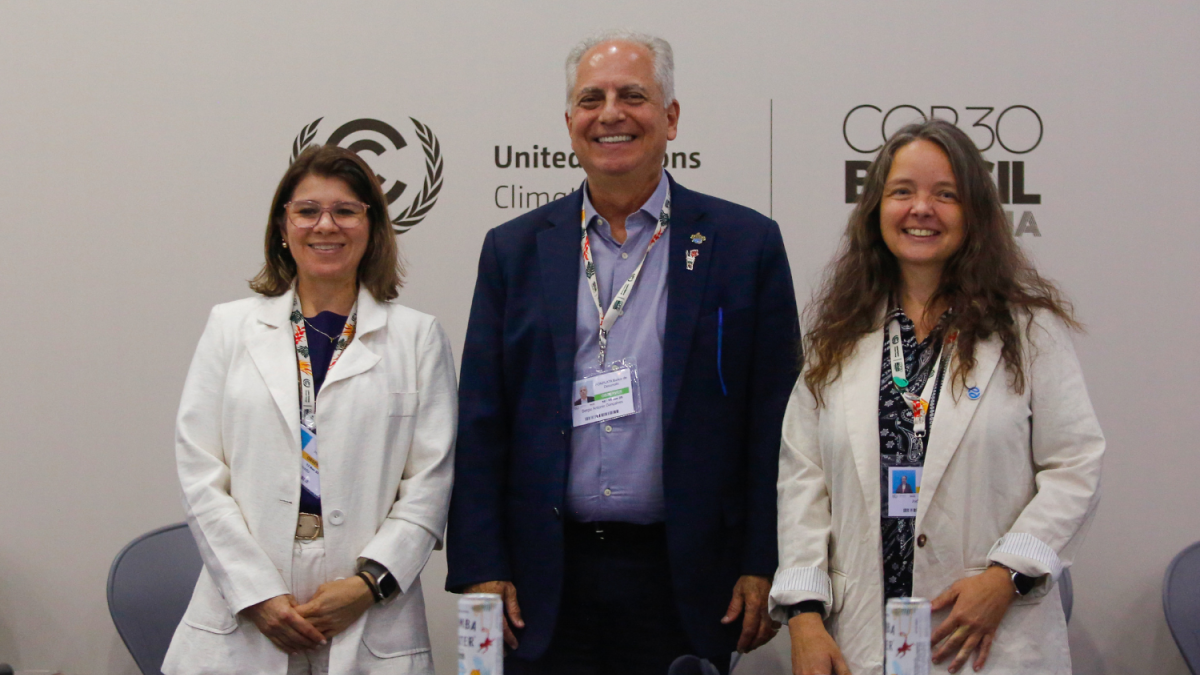
The second panel, Financial and Technical Pathways for Subnational Implementation, explored how to mobilize local resources and capacities. It featured Paula Pacheco, Water and Earth Sciences Specialist at the organization Agua Sustentable; Camilo Alejo, Postdoctoral Researcher at Concordia University; Sergio Gonçalves, Executive Director of the Brazilian Association of Sanitation Companies and State Institutions (AESBE); and Dr. Yara Moretto, Associate Professor at the Federal University of Paraná. The discussion was moderated by Judit Ungvari, Co-Director of Research and Innovation at Future Earth.
Experts from academia and water and sanitation institutions highlighted the importance of closing the gap between global commitments and implementation, strengthening natural infrastructure as a complement to gray infrastructure, and using scientific tools—such as vulnerability indicators, ecological modeling, and satellite information—to guide decisions. The panel also emphasized the key role of indigenous and community knowledge and the need to advance financing mechanisms that recognize and enhance this knowledge.
The event was organized by FONPLATA together with Agua Sustentable, Concordia University, Global Fund for Cities Development – FMDV, Future Earth, OPEC Fund for International Development, and Stockholm International Water Institute – SIWI, consolidating a global cooperation network to promote nature-based solutions from and for the Global South.
Leveraging its extensive network of partnerships, the event demonstrated how these solutions can be replicated and scaled up globally, positioning Latin America and the Global South as leaders in the implementation of the GGA.
11/14/2025